In modern life, vacuum cleaners have become familiar devices that help make cleaning faster and more efficient. From small households to offices, buildings, and factories, vacuum cleaners play an important role in maintaining a clean environment. However, not everyone clearly understands the difference between household vacuum cleaners and industrial vacuum cleaners used in industrial cleaning.
So how are these two types of machines different? Which one should be chosen for each purpose? The article below will help you compare industrial vacuum cleaners and household vacuum cleaners in detail, while also helping you understand the role of this equipment in today’s industrial cleaning operations.
Overview of household vacuum cleaners
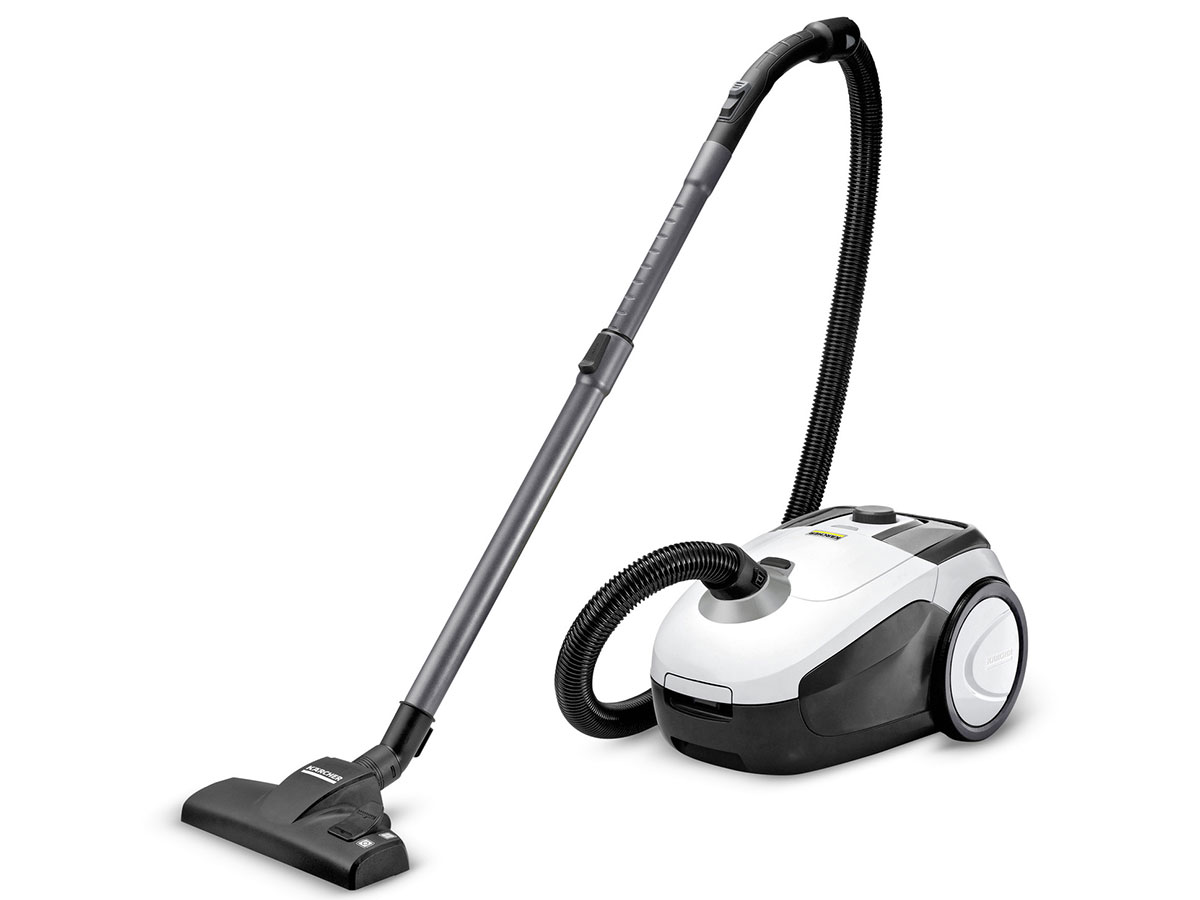
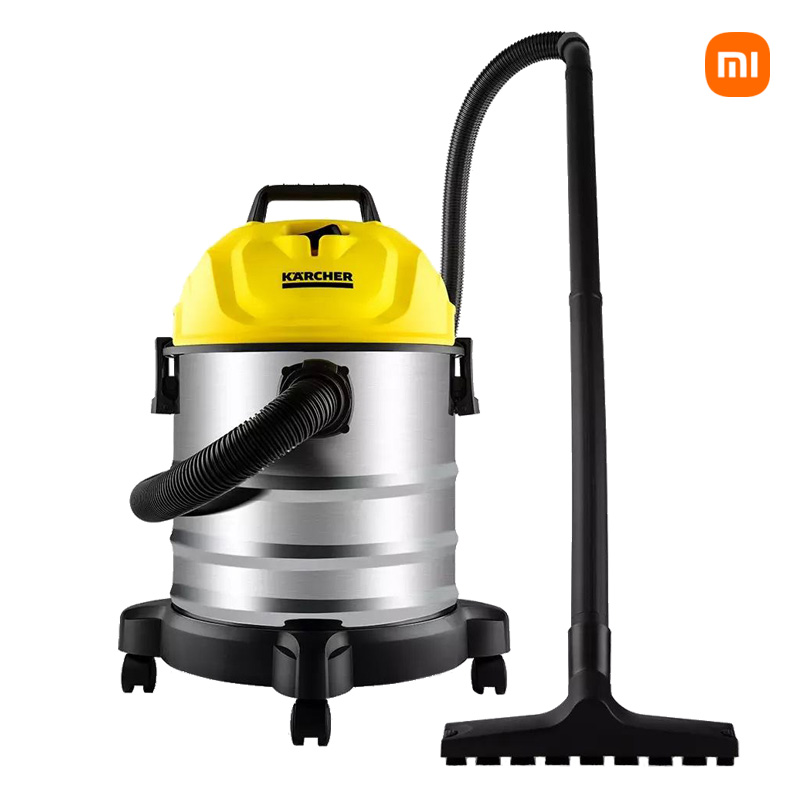
Household vacuum cleaners are devices designed for cleaning small spaces such as homes, apartments, or small offices. These machines are usually compact, lightweight, easy to move, and simple to operate.
Household vacuum cleaners are commonly used for:
– Vacuuming floor dust
– Cleaning carpets
– Cleaning sofa surfaces
– Vacuuming small corners in the house
Since the cleaning demand is not too large, household vacuum cleaners usually have moderate power, enough to handle common dust and dirt in daily living environments.
However, in environments with large areas or heavy dust accumulation such as factories, shopping centers, or construction sites, this type of machine will not be able to meet the requirements of industrial cleaning tasks.
Overview of industrial vacuum cleaners
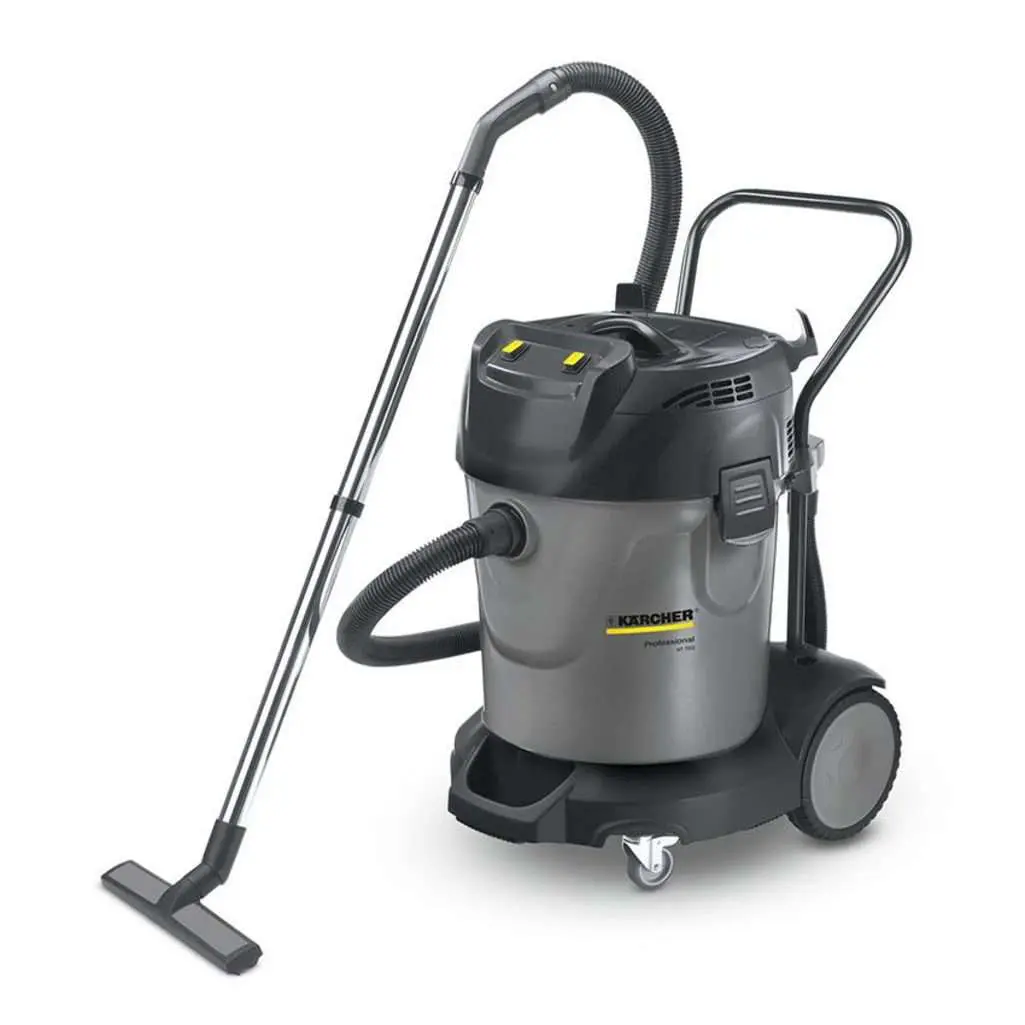
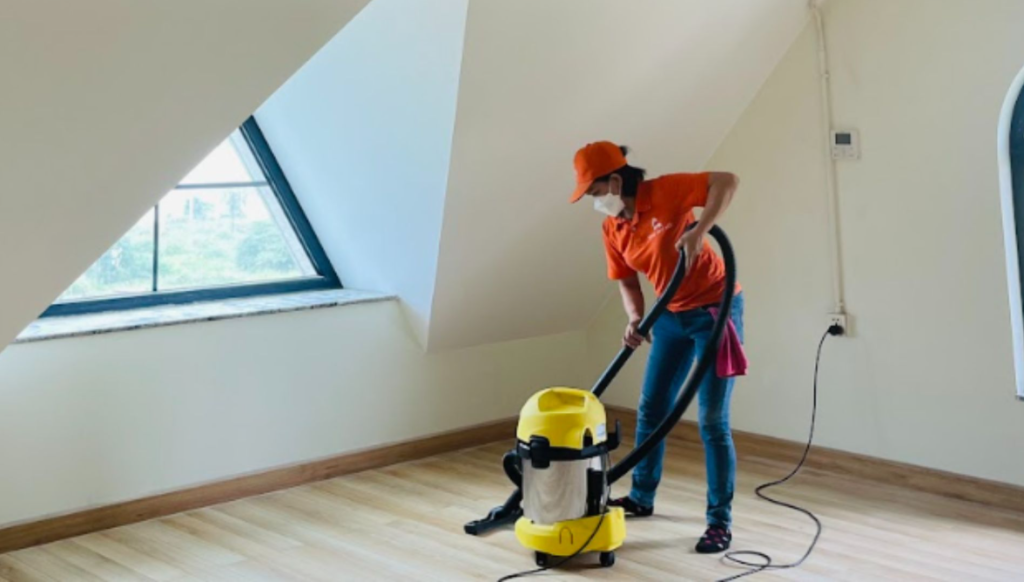
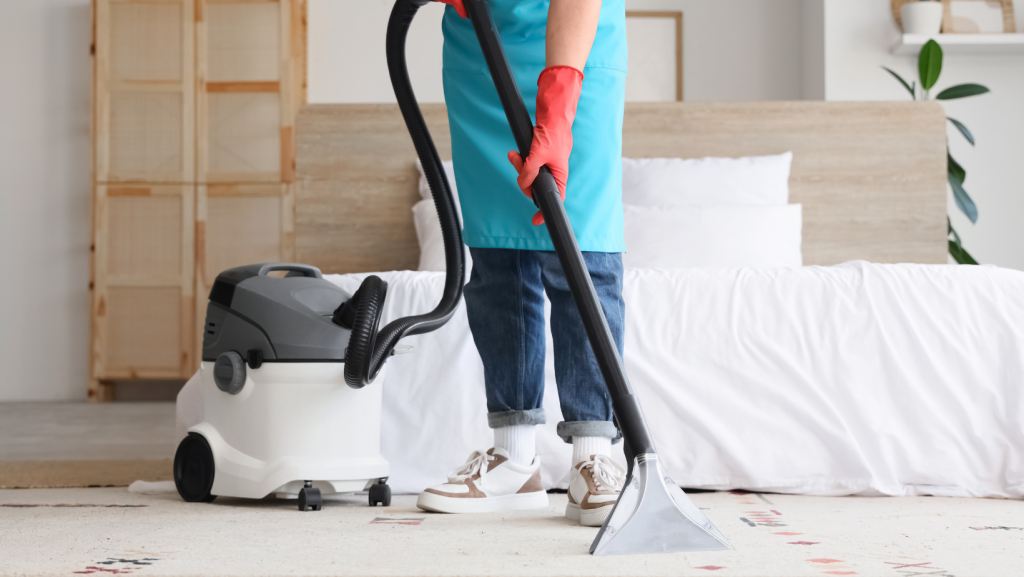
Industrial vacuum cleaners are specialized machines designed to serve large-scale cleaning tasks. In the industrial cleaning industry, these machines are often used to vacuum dust, debris, water, and other types of dirt in large spaces.
Industrial vacuum cleaners are commonly used in areas such as:
– Office buildings
– Manufacturing factories
– Shopping centers
– Hotels
– Hospitals
– Post-construction sites
Compared to household vacuum cleaners, industrial vacuum cleaners have stronger power, larger tank capacity, and the ability to operate continuously for long periods. Therefore, they are essential equipment in large-scale industrial cleaning projects.
Comparison between industrial and household vacuum cleaners
To better understand the differences between these two types of equipment, we can compare them based on several criteria such as power, capacity, durability, and usage scope.
Operating power
One of the biggest differences between industrial and household vacuum cleaners is their power capacity.
Household vacuum cleaners usually have power ranging from 1000W to 2000W, which is sufficient for cleaning dust in homes or small offices.
Meanwhile, industrial vacuum cleaners typically have power ranging from 2000W to over 4000W, and many models are equipped with 2–3 motors operating simultaneously. Thanks to this strong power, they can vacuum dust faster and more effectively in industrial cleaning projects.
Dust tank capacity
The capacity of the dust container directly affects how long the machine can operate continuously.
Household vacuum cleaners usually have small dust containers, about 1–5 liters, suitable for home cleaning. However, when used in dusty environments such as construction sites, users will need to empty the dust very frequently.
In contrast, industrial vacuum cleaners have much larger tanks, usually ranging from 20–80 liters. This allows industrial cleaning staff to work for longer periods without stopping frequently to empty the dust.
Ability to vacuum dust and water
Household vacuum cleaners are mainly designed for dry dust cleaning. Some high-end models can vacuum water, but their capability is still limited.
Meanwhile, many industrial vacuum cleaners are designed to handle both dry and wet cleaning, making them highly suitable for industrial cleaning tasks in factories, warehouses, or areas with standing water.
This is a major advantage that makes industrial vacuum cleaners an essential device in professional industrial cleaning services.
Durability and continuous operation
Household vacuum cleaners are typically designed for short-term use, operating for limited periods during each cleaning session.
In contrast, industrial vacuum cleaners are designed to operate continuously for long hours. Components such as motors, tanks, and filtration systems are built with higher durability.
Scope of use
Household vacuum cleaners are suitable for:
– Homes
– Apartments
– Small offices
Meanwhile, industrial vacuum cleaners are used in environments with large areas such as:
– Office buildings
– Manufacturing factories
– Shopping centers
– Hotels
– Construction sites
Therefore, companies providing industrial cleaning services often prioritize using industrial vacuum cleaners to ensure work efficiency.
In industrial cleaning projects, the amount of dust and debris is usually much larger than in regular household cleaning. If a household vacuum cleaner is used, the cleaning efficiency will be low and the machine may also be easily damaged.
Industrial vacuum cleaners help to:
– Clean large areas faster
– Save working time
– Reduce labor effort
– Increase the efficiency of the industrial cleaning process
In addition, when combined with other equipment such as industrial floor scrubbers or floor cleaning machines, industrial vacuum cleaners help make the industrial cleaning process more professional and effective.

Although they are not as powerful as industrial vacuum cleaners, household vacuum cleaners are still suitable choices in many situations.
You should use a household vacuum cleaner when:
– The cleaning area is small
– The amount of dust and dirt is not large
– The usage is not frequent
In these cases, household vacuum cleaners help save costs while still meeting basic cleaning needs.
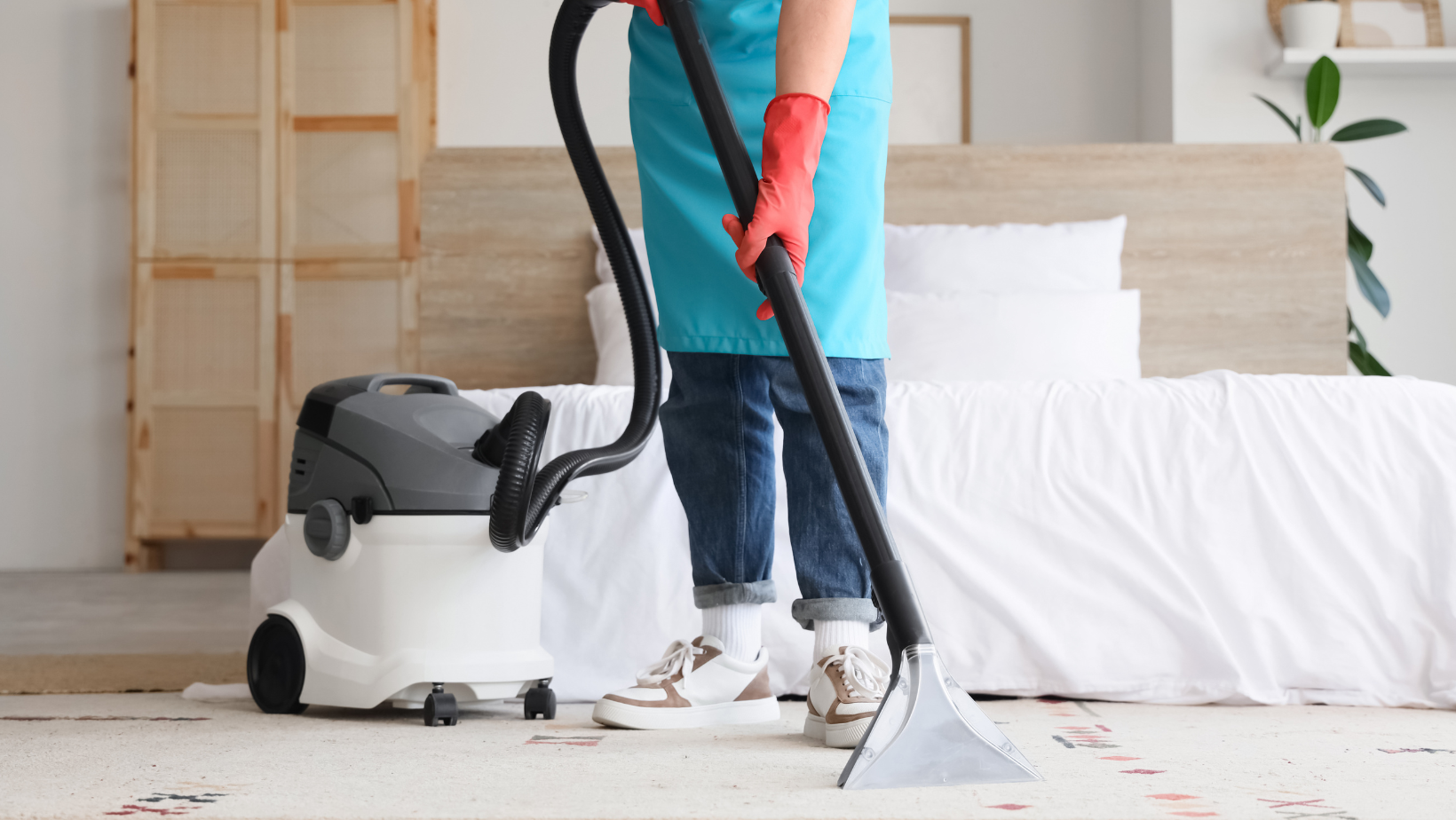
Vacuum cleaners are essential devices that make cleaning easier and more efficient. However, household vacuum cleaners and industrial vacuum cleaners are designed for completely different purposes.
When equipped with the right machines and proper processes, cleaning operations can help maintain a clean, professional, and safe environment for everyone.
- The journey of large-scale event cleaning: KlinClean and the non-stop night shifts
- Building appearance restoration process: 6 essential post-construction cleaning items
- Cleaning process for fixtures on ceilings, walls, and floors
- Professional material cleaning procedures in industrial cleaning in Ha Noi
- KlinClean – Professional exhibition cleaning solution