Collecting Fallen Leaves and Soil Around Plant Pots
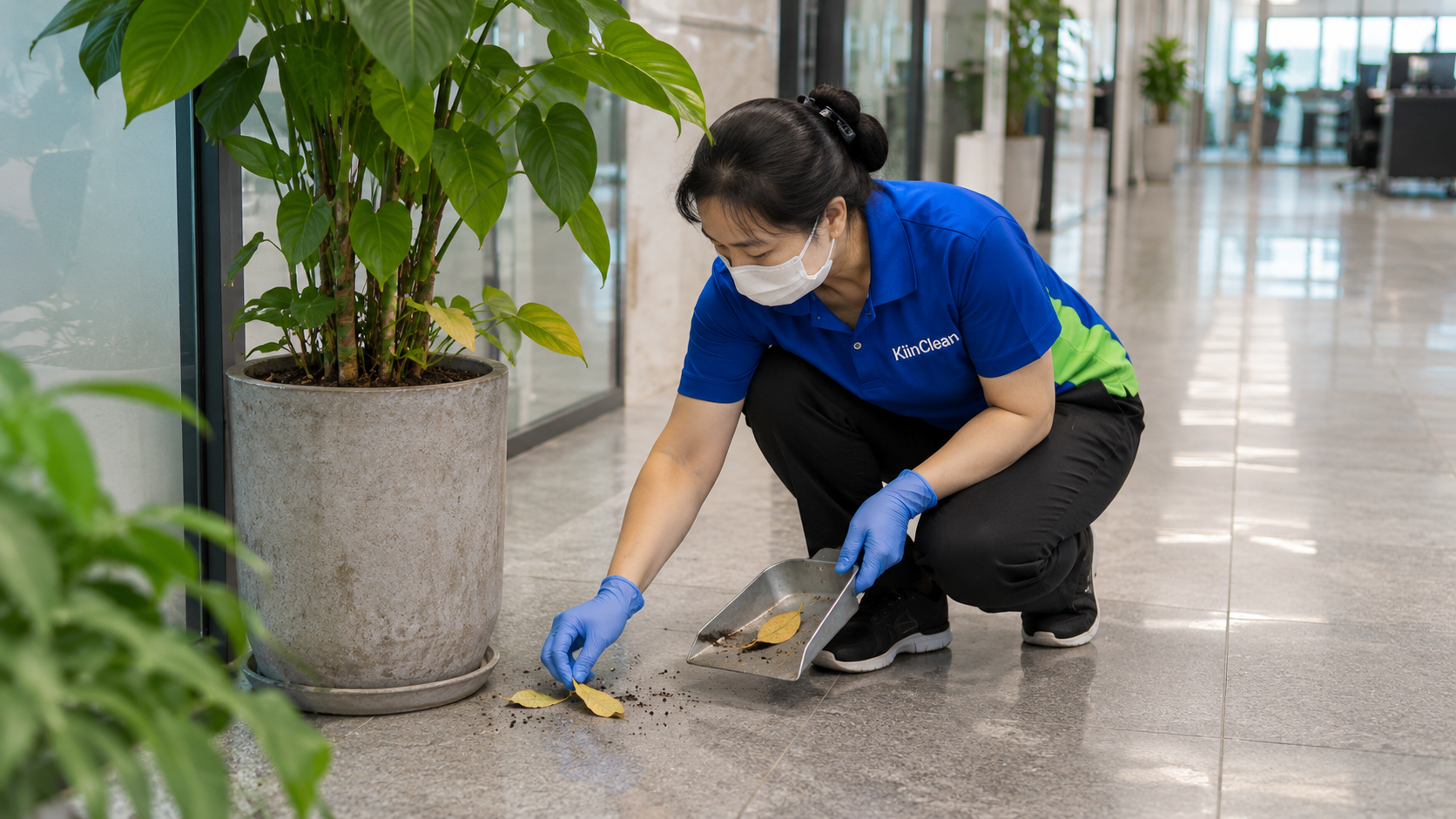
In offices with plenty of indoor plants, fallen yellow or dry leaves are unavoidable. Some plants may shed only a few leaves each day, but if they are not collected regularly, they can be blown under desks, into corners, or into other areas that are difficult to notice.
Soil can also spill out of pots when plants are watered, trimmed, or repotted. This is especially common with plants placed near walkways, where scattered soil can be stepped on and leave marks on the floor.
When cleaning around plant pots, staff should collect fallen leaves and loose soil before mopping the floor. If the soil is still dry, it should be removed using suitable cleaning tools. Wiping it immediately with a wet cloth may spread the soil across the floor, creating streaks that take more time to clean.
For daily office cleaning services in Hanoi, these small tasks should be carried out regularly, particularly in lobbies, hallways, and reception areas. Paying attention to these details during routine cleaning helps keep the areas around indoor plants clean and tidy.
Check for Standing Water Under Plant Pots and in Surrounding Areas
In addition to fallen leaves and scattered soil, water used for watering plants is another issue that needs attention. Many plant pots have drainage trays underneath, but overwatering or a full tray can cause water to overflow onto the floor.
On tiled floors, standing water can make the surface slippery or leave stains if not cleaned up promptly. In areas with wooden flooring or carpets, water that seeps underneath and goes unnoticed can be more difficult to deal with.
Some plant pots are placed close to walls or cabinets. Although the surrounding floor may appear dry, moisture can still accumulate underneath the pots. Therefore, during routine cleaning, staff should check the base of each pot and the areas where it meets the floor, rather than focusing only on easily visible spaces.
When water spills onto the floor, cleaning staff should dry the affected area and check whether water is still leaking from the pot. If the problem occurs repeatedly, they should inform the person in charge so that the drainage tray or watering practices can be checked.
In offices where plants are placed near desks, electrical outlets, or furniture, checking for moisture requires extra care. This is a small but important detail in daily office cleaning services in Hanoi.
Don’t Overlook Hidden Areas Behind Plant Pots
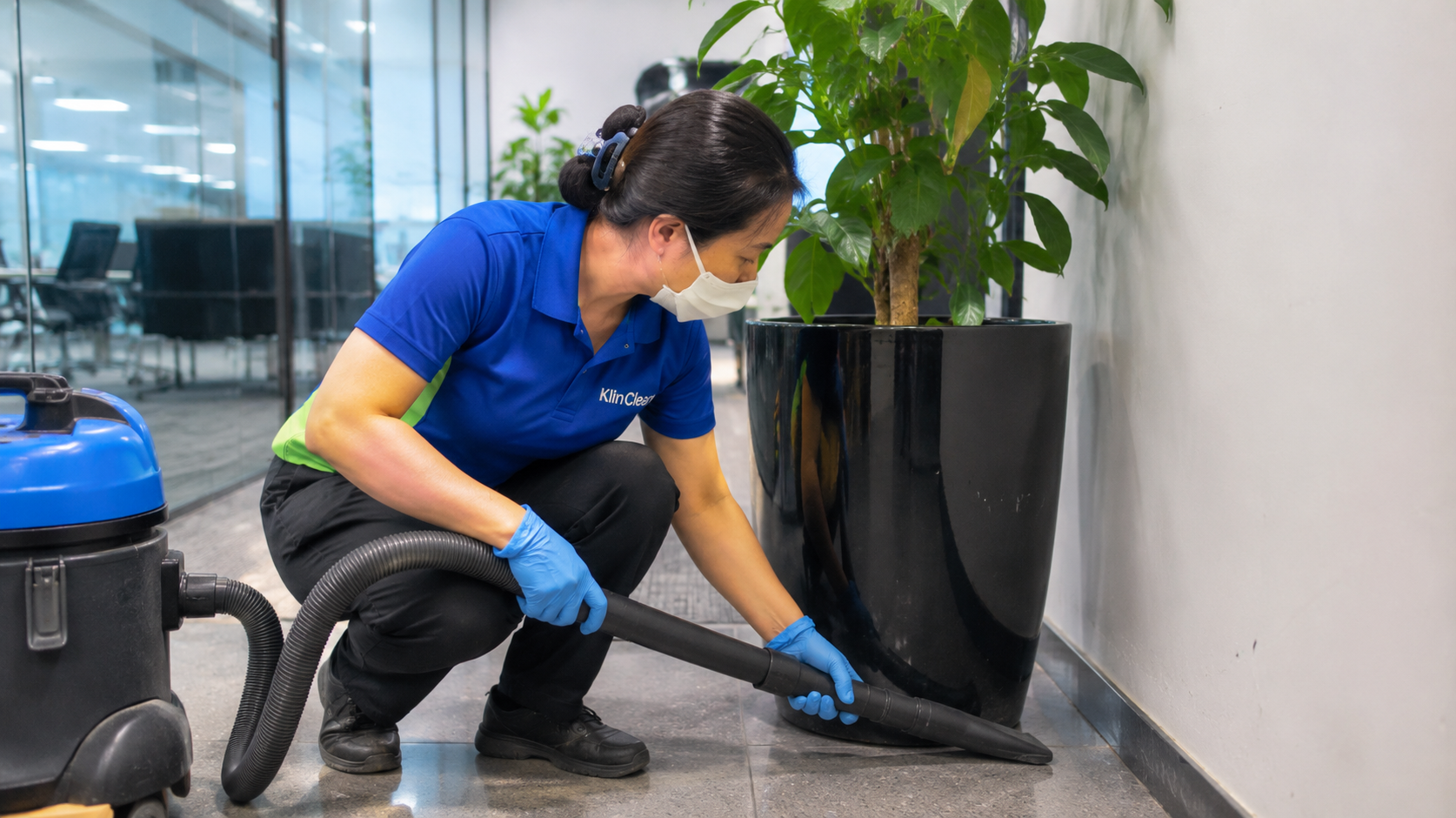
Large plant pots are often placed in office corners, next to glass windows, beside cabinets, or between reception areas. While this arrangement makes the office more attractive, it can also create narrow spaces that are difficult for cleaning staff to reach with a mop or vacuum cleaner.
If only the visible floor areas are cleaned, dust may continue to accumulate behind plant pots, along the edges of walls, or underneath plant stands. These hidden areas often become noticeable only when the pots are moved during office rearrangements.
Therefore, when cleaning offices with plenty of indoor plants, staff should carefully check where the pots are placed. Narrow spaces can be cleaned using cloths, small vacuum attachments, or other suitable tools instead of trying to reach every corner with a floor mop.
For large or heavy plant pots, especially those placed close to furniture, staff should avoid moving them without permission. Dragging these pots may scratch the floor, spill soil, or damage the containers. If moving them is necessary for thorough cleaning, staff should consult the person in charge to ensure it is done safely.
When providing office cleaning services in Hanoi, each workplace may have a different arrangement of indoor plants. Cleaning staff need to choose suitable tools and methods to keep hidden areas clean without disturbing the office layout.
Be Careful When Cleaning Around Plants on Desks and Decorative Shelves
Besides large plants placed on the floor, many offices also have small potted plants on desks, reception counters, bookshelves, or windowsills. These areas are cleaned regularly, so staff need to be especially careful when working around them.
A small plant pot may be placed next to a computer, documents, or decorative items. When wiping the surface, staff should work gently to avoid moving the pot, spilling soil, or allowing water from the cleaning cloth to reach nearby equipment.
For shelves with several pots placed close together, staff should avoid forcing a cloth into spaces that are too narrow. If thorough cleaning is not possible without moving the pots, they should consult the person in charge to agree on a suitable approach.
In offices with many decorative items and indoor plants, careful handling is just as important as effective cleaning. Staff must not only clean surfaces but also make sure that furniture, decorations, and other items remain in their original positions.
Take Precautions When Using Cleaning Chemicals Near Indoor Plants
During office cleaning services in Hanoi, staff often use cleaning products for floors, glass, and various furniture surfaces. However, extra care is needed when these products are used in areas with indoor plants.
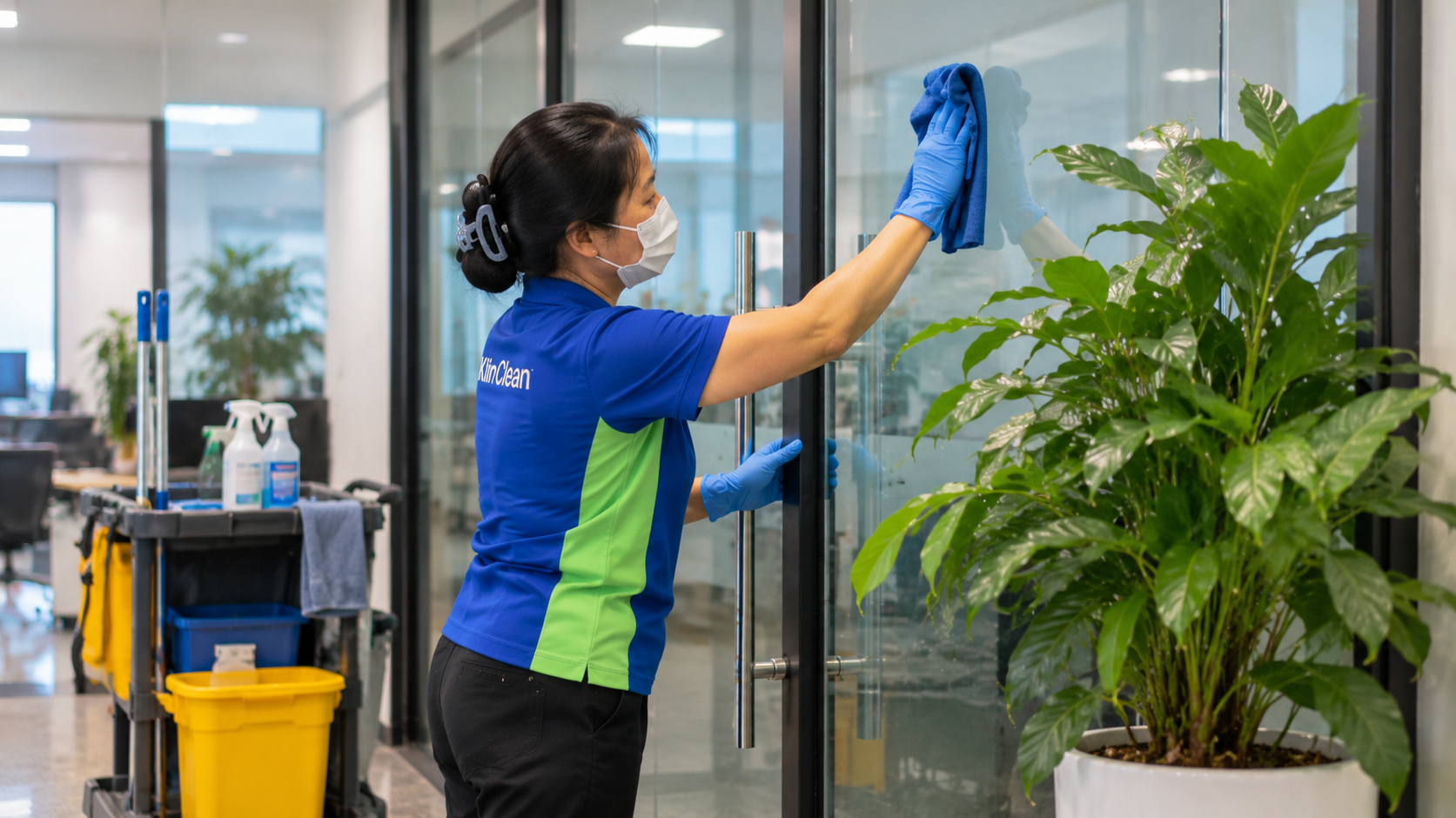
When cleaning glass behind a plant pot, spraying cleaning solution directly onto the surface may cause chemicals to splash onto the leaves or drip into the soil. Similarly, when mopping floors near low-growing plants, staff should prevent cleaning solutions from accumulating around the base of the plants or in their trays.
To reduce these risks, staff can apply an appropriate amount of cleaning solution to a cloth or cleaning tool instead of spraying it directly toward the plants. They should also select products suitable for each surface and follow the manufacturer’s instructions.
If staff notice unusual signs on plant leaves, they should not attempt to treat them with cleaning chemicals. Issues related to pests, diseases, or plant health should be reported to the person responsible for maintaining the indoor plants.
Coordinate Cleaning Tasks with Plant Maintenance Schedules
In offices with many indoor plants, watering, pruning, and soil replacement are usually handled by administrative staff or professional plant maintenance providers. Without proper coordination, cleaning staff may finish mopping the floor just before the plant maintenance team starts watering, leaving scattered soil, fallen leaves, or water on the freshly cleaned surface.
Although this is not a major issue, it can create unnecessary extra work. Therefore, if the office has a regular plant maintenance schedule, the cleaning supervisor should communicate with the relevant team in advance to arrange tasks in a suitable order.
On days when plants are pruned or repotted, the surrounding areas can be cleaned after the maintenance work is completed. On regular days, cleaning staff can follow their daily schedule while collecting fallen leaves and checking for standing water when necessary.
This coordination helps both teams work more efficiently. Cleaning staff can avoid cleaning the same area repeatedly, while plant maintenance workers can complete their tasks without disrupting the overall cleaning schedule.
KlinClean Provides Office Cleaning Services Tailored to Each Workplace
Every office has its own layout and way of using space. Some workplaces have only a few small plants on desks, while others feature greenery throughout their lobbies, hallways, and working areas. Therefore, cleaning tasks should be arranged according to the actual conditions of each office rather than applying the same approach everywhere.
At KlinClean, we focus on assessing the condition of each workplace, providing proper guidance to our cleaning staff, and coordinating with clients throughout the cleaning process. Even small details in the office environment deserve attention to ensure that daily cleaning runs smoothly without disrupting employees’ work or daily activities.
- Occupational safety in industrial cleaning: Standards of reputable industrial cleaning companies in Ha Noi
- Professional material cleaning procedures in industrial cleaning in Ha Noi
- KlinClean – Reputable cleaning company in Ha Noi
- Best Industrial Cleaning Services: KlinClean’s Ultimate Honda Showroom Care
- What Are the Differences Between Daily Office Cleaning and Periodic Office Cleaning?