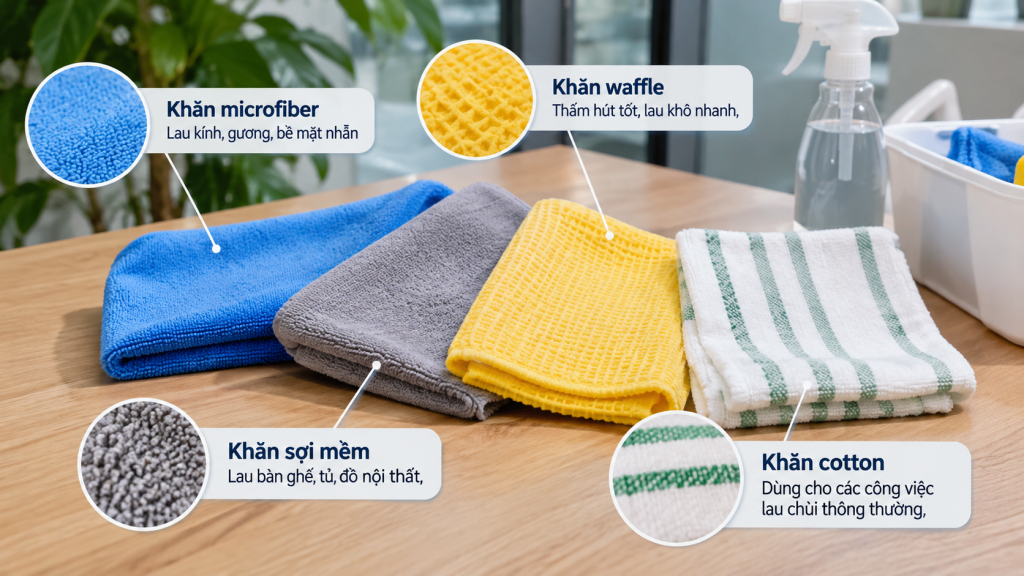
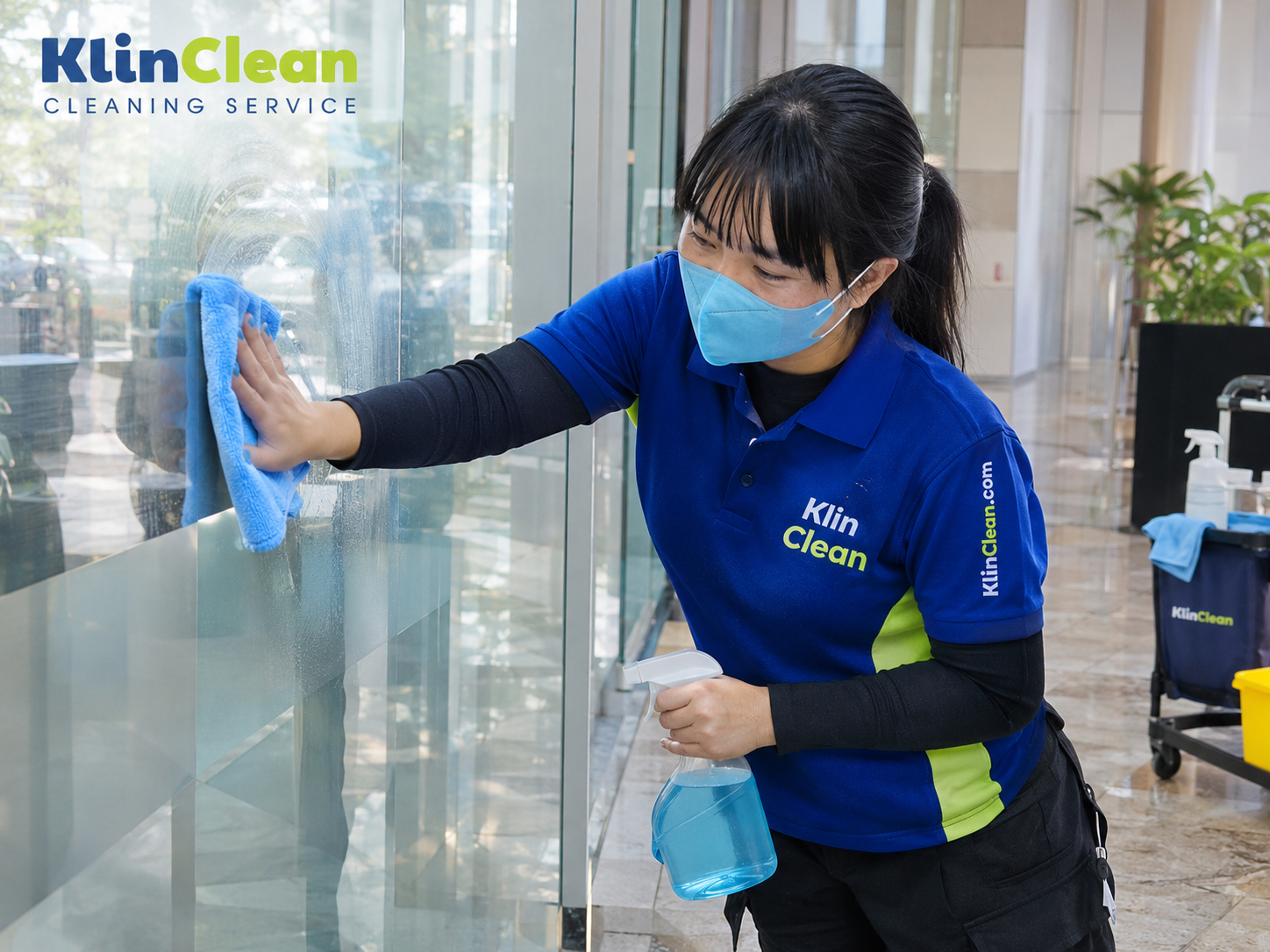
When cleaning glass, employees sometimes wipe the surface very carefully yet streaks and cloudy marks are still visible under the light. Even after wiping several more times, the glass does not look any cleaner. In some cases, tiny fabric fibers may even be left behind.
This problem may actually come from the cloth being used. If the cloth sheds lint, has collected dust, or is too wet, it can be difficult to achieve a completely clean glass surface. This is especially noticeable in showrooms, building lobbies, and product display areas, where streaks become more visible when light shines on the glass.
Therefore, when providing industrial cleaning services in Hanoi in areas with large glass surfaces, employees should use clean, low-lint microfiber cloths suitable for glass cleaning. During the cleaning process, if a cloth becomes dirty or too damp, it should be replaced with a clean one rather than repeatedly wiping the same surface without achieving better results.
In addition, cleaning solutions should be used in appropriate amounts. Sometimes, streaks remain on glass not because it has not been cleaned thoroughly, but because the cloth or cleaning solution is unsuitable. Simply adjusting the cleaning method can help achieve better results without using additional chemicals.
Surfaces Can Still Get Scratched Even When Cleaned with a Cloth
Many people assume that using a soft cloth is enough to prevent scratches on furniture and other surfaces. However, during cleaning, tiny particles of dust, sand, or grit can become trapped in the cloth without employees noticing. If the same cloth continues to be used, these particles may rub against the surface and leave scratches.
This is particularly concerning for glossy painted desks, decorative cabinets, reception counters, and polished metal surfaces. These areas require careful cleaning to protect their exterior finishes.
For example, an employee may use a cloth to wipe a dusty windowsill and then continue using it to clean a reception counter. Even if the cloth does not appear particularly dirty, small particles trapped in its fibers may still damage the counter’s finish.
For this reason, employees should use clean, soft cloths suitable for the specific material when cleaning surfaces that are prone to scratching. If the surface contains dust or abrasive particles, these should be removed using an appropriate method before wiping it directly.
Excessively Wet Cloths Can Damage Furniture
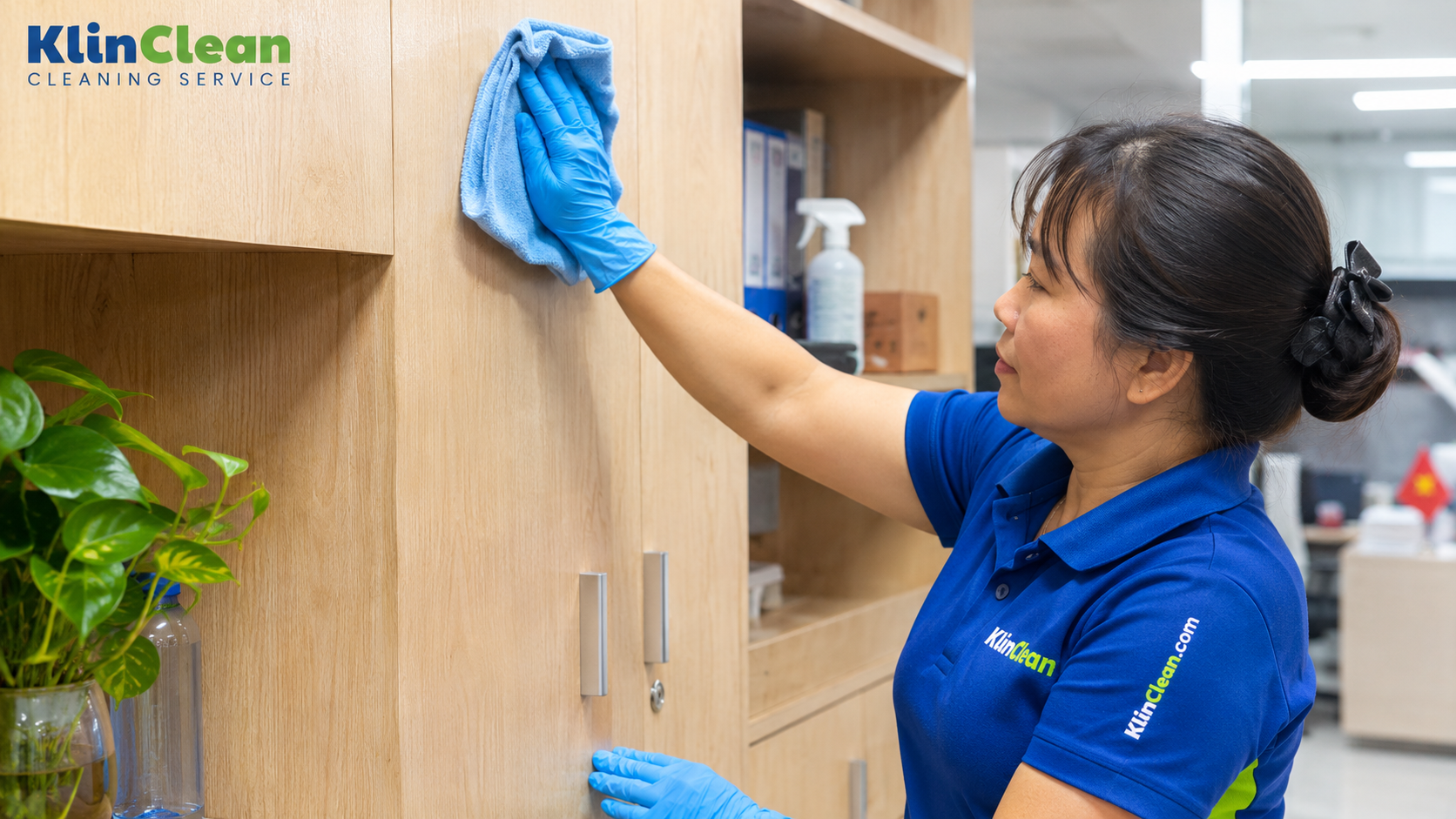
When cleaning desks, chairs, cabinets, and other furniture, using more water does not necessarily produce better results. For surfaces such as engineered wood, wood veneer, and other moisture-sensitive materials, wiping with an excessively wet cloth can lead to unwanted damage.
This is also an important consideration when providing industrial cleaning services in Hanoi at facilities with extensive wooden furniture.
For example, when wiping a cabinet with a cloth that contains too much water, moisture may run down the edges or seep into the joints. The effects may not be immediately noticeable after just a few cleanings. However, if this happens repeatedly, the wood-based material underneath may swell, while the outer finish may begin to peel or separate.
Electronic devices also require special attention. Using an excessively wet cloth to clean monitors, keyboards, or control panels may allow moisture to enter small openings and potentially damage the equipment.
Using the Same Cloth in Different Areas Can Spread Dirt to Cleaned Surfaces
In addition to choosing the right cloth for each surface, cleaning staff should avoid using the same cloth in different areas.
A cloth that has been used to clean a bathroom sink should not be used to wipe dining tables or pantry counters. Even after a quick rinse, the cloth may still contain dirt and microorganisms, potentially transferring contamination to other surfaces.
To reduce this risk, professional industrial cleaning service in Hanoi often use color-coded cleaning cloths to help employees identify and use the correct cloth for each area. Cloths used in restrooms are kept separate from those used for desks, furniture, and food preparation or dining areas.
The color-coding system may vary depending on the requirements of each facility, but the main purpose remains the same: preventing dirt and contaminants from being transferred between different areas.
Employees should also pay attention to the condition of their cleaning cloths while working. If a cloth has collected too much dirt or dust, it should be replaced with a clean one rather than continuing to use it on other surfaces.
How to Choose the Right Cleaning Cloth for Different Surfaces
After understanding the problems that can arise from using unsuitable cloths, the next step is knowing how to choose the right one for each cleaning task.
There is no need to use too many different types of cloths. However, employees should understand which cloths are suitable for specific surfaces and when they need to be replaced.
– Glass doors and mirrors: Clean, low-lint microfiber cloths specifically designed for glass cleaning are recommended to minimize streaks and fabric fibers.
– Desks, cabinets, and furniture: Consider the material and surface finish before cleaning. Glossy painted surfaces, wood veneer, and other delicate finishes should be wiped with soft cloths free from dust, sand, or abrasive particles.
– Stainless steel and metal surfaces: Soft, clean, low-lint cloths are generally more suitable than rough-textured cleaning materials.
– Electronic devices and screens: Avoid using ordinary cleaning cloths without checking their suitability, especially those that have come into contact with cleaning chemicals. Employees should follow the manufacturer’s recommendations when choosing cleaning cloths and methods to prevent damage to protective coatings or internal components.
How Can You Tell If a Cleaning Cloth Is Unsuitable?
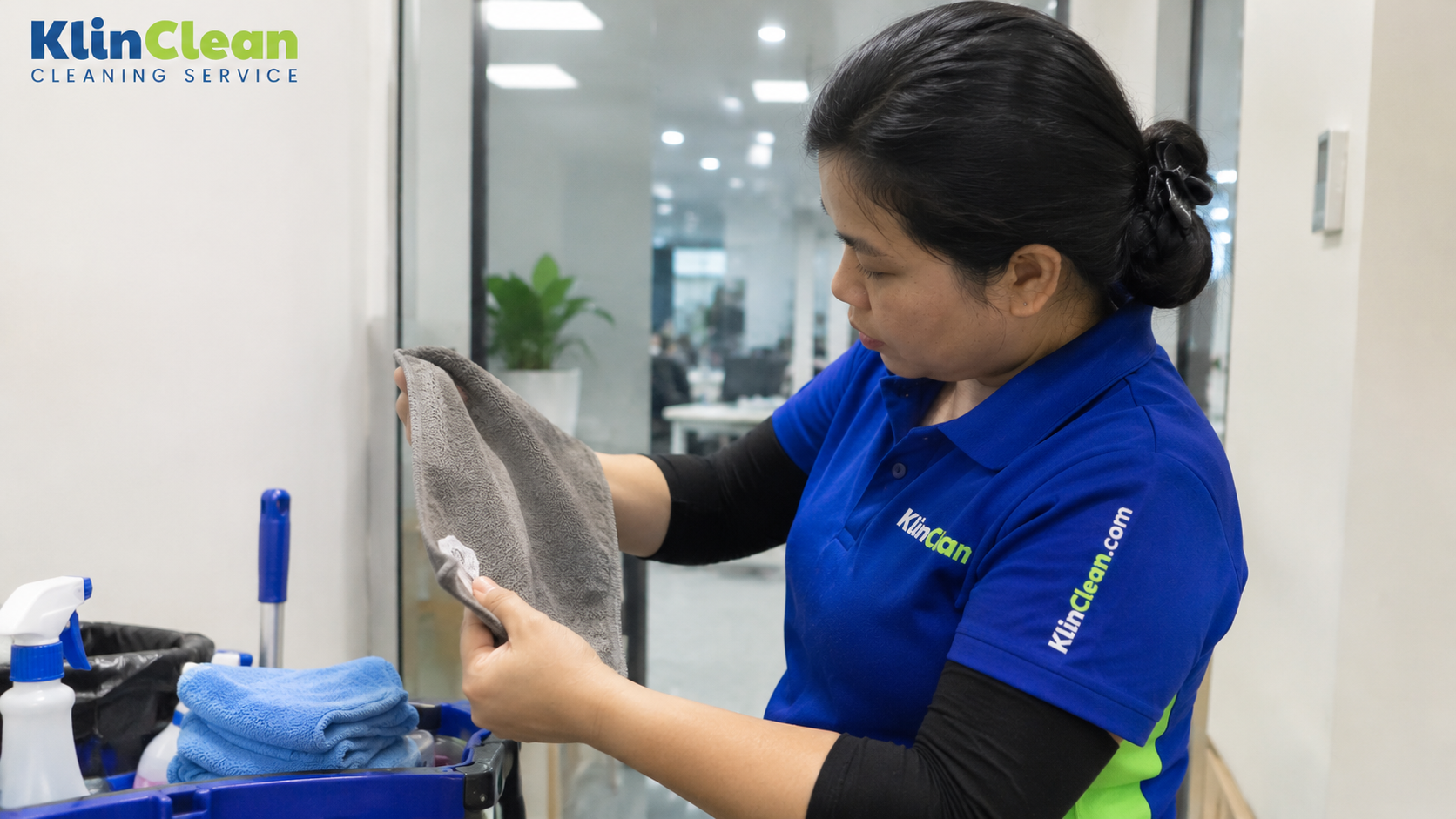
The most noticeable signs are lint, streaks, or dirt being transferred from one area to another during cleaning. If a cloth repeatedly leaves these marks behind, employees should check its condition before continuing their work.
In addition, some cleaning cloths may become stiff, frayed, or heavily soiled after prolonged use, making them difficult to clean properly. Even if a cloth was originally suitable for a particular task, it should no longer be used on delicate surfaces once its condition has deteriorated.
When a problem is identified, employees should stop cleaning, inspect the cloth, replace it if necessary, and reassess the area they have just cleaned. If the surface shows signs of scratching or other unusual changes, they should report the issue to their supervisor rather than continuing to scrub or wipe it.
Checking cleaning tools during daily operations allows industrial cleaning services in Hanoi to identify unsuitable cleaning practices early. This helps employees make adjustments before working on larger areas, instead of discovering problems only during the final inspection or handover.
Proper Use of Cleaning Cloths Is Also a Skill That Requires Training
Cleaning cloths are simple tools, so many newcomers to the cleaning industry assume there is not much to learn about using them. However, once they begin working in facilities with different types of furniture, materials, and equipment, they quickly realize that using cleaning cloths properly requires knowledge and attention to detail.
At KlinClean, employee training is an important part of delivering professional industrial cleaning services in Hanoi. From everyday tasks such as using cleaning cloths to operating cleaning machines and equipment, employees receive guidance to ensure they perform their work correctly.
After all, cleaning quality does not depend solely on large machines or specialized chemicals. Sometimes, the difference comes from something as simple as an employee understanding the task and choosing the right cleaning cloth for the job.
- Trends in Hiring Office Cleaning in Hanoi in the Modern Era
- Professional material cleaning procedures in industrial cleaning in Ha Noi
- KlinClean Provides Post-Event Cleaning Services Following the Car Launch at Toyota My Dinh
- KLINCLEAN’S DAILY OFFICE CLEANING SOLUTION BASED ON THE SINGAPORE CLEAN STANDARD
- KLINCLEAN – PROFESSIONAL CLEANING SERVICES IN CAU GIAY