To eliminate these residues without damaging newly finished surfaces, post-construction cleaning requires appropriate cleaning methods for each area and material. Particular attention should be paid to areas that may appear clean at first glance but still contain dust, stubborn stains, or adhesive residue upon closer inspection.

Why Is Post-Construction Cleaning Still Necessary After a Building Is Completed?
At first glance, a newly completed space may already appear quite clean. However, during construction, dust generated from tile cutting, wall drilling, furniture installation, and surface sanding can spread and settle in various areas.
This type of dust is often extremely fine, making it difficult to remove completely through basic sweeping or wiping. In some cases, these methods may even spread dust to areas that have already been cleaned. In addition, installation work can leave behind adhesive residue, paint stains, cement deposits, and small pieces of construction materials along wall edges, door frames, and floor joints.
For this reason, post-construction cleaning should be carried out according to the actual condition of the building rather than using the same cleaning methods applied to spaces in everyday use. Newly finished surfaces require particular care to prevent scratches, discoloration, or damage to protective coatings.
Cleaning Glass Surfaces Without Causing Damage
Glass is one of the surfaces where construction residue is most noticeable. In addition to ordinary dust, glass panels may have adhesive marks from protective tape, paint stains, or residue around newly installed fixtures.
At properties such as Lancaster Luminaire, glass cleaning requires careful attention, particularly in areas with large glass doors, glass partitions, and newly installed components.
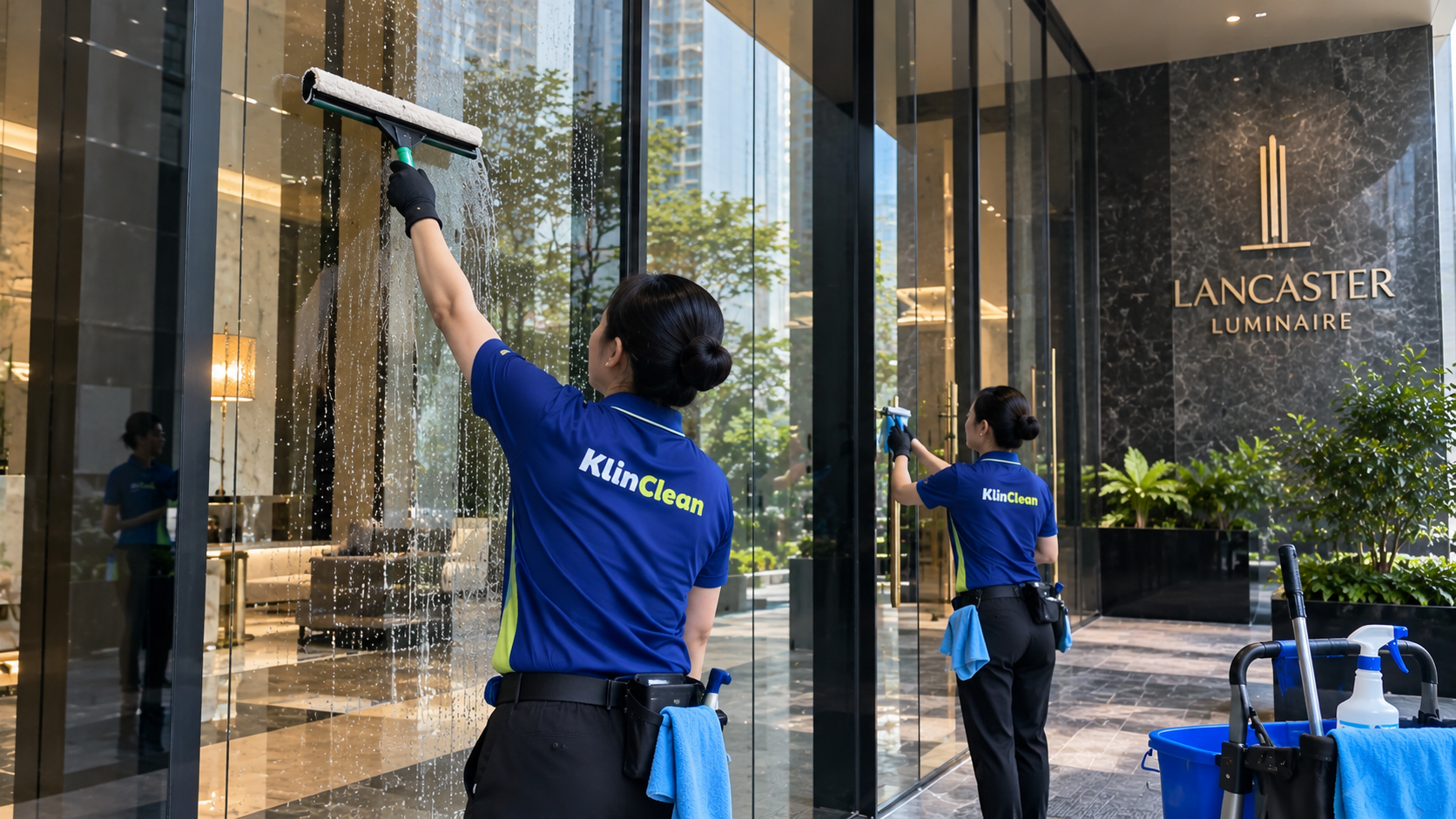
Removing Dust and Stubborn Stains from Glass Surfaces
Before cleaning the glass, staff remove dust and small particles of construction materials that could cause scratches when cleaning tools come into contact with the surface. The glass is then cleaned using appropriate cleaning solutions and equipment, followed by a squeegee to minimize streaks and watermarks as it dries.
For stubborn stains, the type and characteristics of the residue should be assessed before selecting a suitable cleaning method. Excessive scrubbing or the improper use of sharp tools should be avoided, as these may leave scratches on the glass.
Paying Attention to Door Frames and Surrounding Areas
Even if the glass itself is spotless, dust or adhesive residue remaining on the frames can make the overall finish look incomplete. Therefore, in addition to cleaning glass surfaces, areas such as door edges, sliding tracks, rubber seals, and joints should also be carefully inspected.
These areas often accumulate construction dust that may not be noticeable from a distance. Thoroughly cleaning these details helps maintain consistent cleanliness across the entire glass door system while preventing leftover dust from spreading when doors are opened or closed.
What Should Be Considered When Cleaning Floors After Construction?
While fingerprints and watermarks are more noticeable on glass, floors tend to accumulate a wider variety of dirt and debris throughout the construction process. Cement dust, fine sand, footprints, paint stains, and construction residue can all remain on floor surfaces after a building is completed.
However, different flooring materials require different cleaning methods. Ceramic tiles, natural stone, wooden floors, and surfaces with protective coatings each have specific cleaning requirements that must be carefully considered during post-construction cleaning.
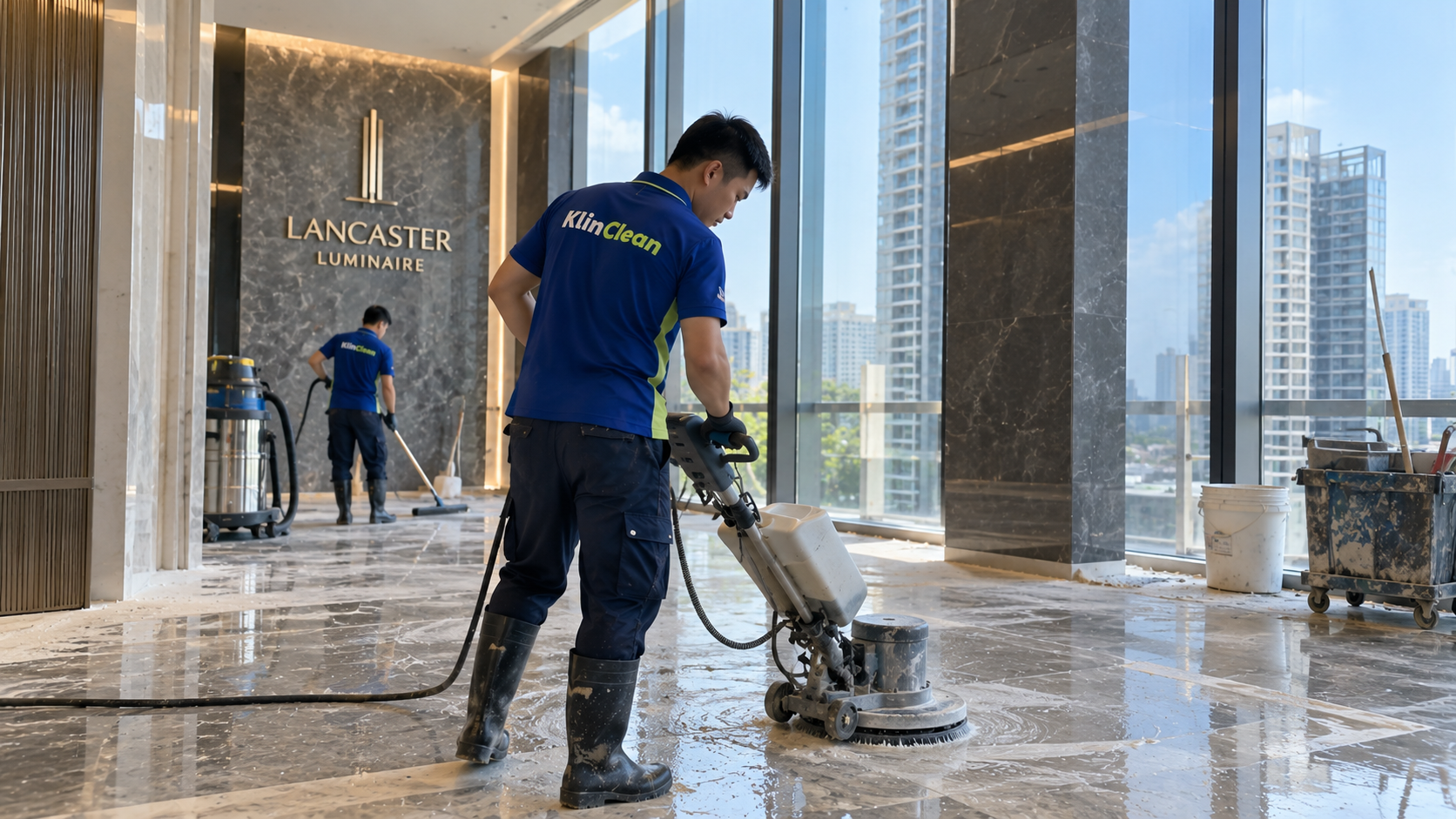
Removing Dust and Construction Debris Before Mopping the Floor
The first step is to remove dry dust, sand, and small pieces of construction debris remaining on the floor. Skipping this step and mopping immediately may cause hard particles to be dragged across the surface, increasing the risk of scratches.
In areas where fine dust has accumulated, industrial vacuum cleaners with suitable attachments can help remove it more effectively. Floor corners, wall edges, and areas near door thresholds require particular attention, as construction dust often settles in these spots.
Cleaning According to Flooring Materials and Surface Conditions
Once dry dust has been removed, cleaning staff proceed to treat any remaining stains on the floor. For large areas with suitable flooring materials, floor-scrubbing machines equipped with appropriate pads may be used. Smaller spaces and areas close to walls often require manual cleaning to allow better control over scrubbing pressure.
An important consideration in post-construction cleaning is avoiding the improper use of strong cleaning chemicals. For example, certain types of natural stone may be damaged by acidic solutions, while wooden floors and moisture-sensitive surfaces require careful control of water usage.
After cleaning, dirty water must be collected, and the floor should be inspected again to ensure that no residue, cleaning streaks, or damp spots remain.
How Are Leftover Adhesive Residues Removed After Construction?
In addition to dust and construction residue, leftover adhesive is another common issue in newly completed buildings. Adhesive marks may remain after removing protective tape, peeling off protective films, or installing interior fixtures.
What makes these adhesive residues particularly difficult to remove is that they vary in type and condition. Some form only a thin layer on the surface, while others may have hardened or become firmly attached to the material over time.
Identifying the Type of Adhesive Before Cleaning
Not all adhesive residues can be removed with water or ordinary cleaning solutions. Therefore, before treatment, it is important to examine where the adhesive is located, how thick the residue is, and what material lies underneath.
Adhesive on glass requires a different cleaning approach from residue on painted surfaces, wood, or stone. Using an unsuitable cleaning solution may remove the adhesive but damage the underlying material.
For surfaces with uncertain chemical resistance, cleaning staff first test the solution on a small, inconspicuous area to check how the material reacts.
Removing Adhesive Without Damaging Newly Finished Surfaces
Once a suitable cleaning method has been identified, the adhesive residue can be carefully treated. Softer adhesive layers may be removed using specialized cleaning solutions compatible with the material, along with tools designed to prevent scratches.
For hardened or long-standing adhesive, the removal process may require several treatments. After the adhesive has been removed, any remaining cleaning solution must also be wiped away to prevent new marks or residue from forming.
This is one of the tasks that requires particular patience during post-construction cleaning, as even a single improper cleaning technique can damage a newly finished surface.
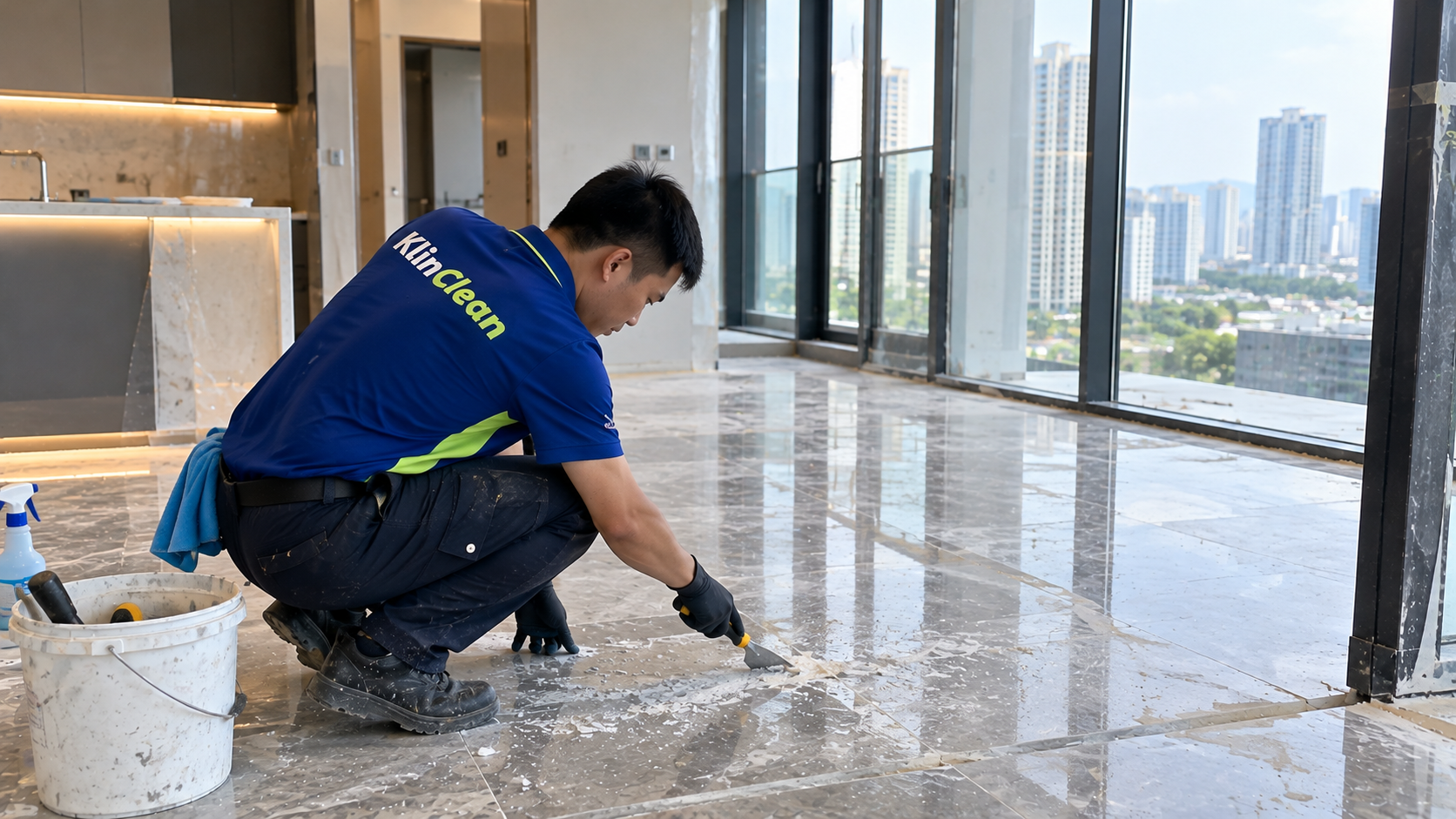
Areas Often Overlooked During Post-Renovation Cleaning
When carrying out post-renovation cleaning or cleaning a recently renovated building, people often focus first on floors, glass doors, and other large surfaces. However, construction dust does not only settle in visible areas. It can also find its way into small gaps during drilling, cutting, and installation work.
In areas with cabinets, shelves, and built-in furniture, dust may accumulate on top of cabinets, inside drawers, or in gaps between furniture and walls. If only the exterior surfaces are wiped down, the remaining dust may spread again when the furniture is used.
Similarly, door frames, window sills, baseboards, light switches, and electrical outlets also need to be checked. When cleaning around electrical equipment, staff must use safe cleaning methods and avoid spraying water or cleaning solutions directly into electrical components.
Another commonly overlooked area is air conditioning vents and the spaces surrounding ventilation systems. Construction dust can accumulate on their exterior surfaces, so these areas should be cleaned using appropriate methods. If dust has entered deeper into the system, specialized technical staff may be required to handle the cleaning.
Paying attention to these small details makes post-renovation cleaning more thorough and helps prevent dust from reappearing shortly after the space is put into use.
How Should Cleaning Be Organized in a Newly Completed Building?
Unlike routine daily cleaning, cleaning a newly completed building often involves handling several tasks at the same time. Without proper planning, dust from areas still being cleaned may spread to sections that have already been completed, forcing staff to repeat their work.
Therefore, before starting, it is important to assess the actual condition of the building, identify areas with remaining construction materials, locate delicate surfaces, and determine which tasks require special attention.
Dividing Cleaning Areas to Prevent Recontamination
For buildings with multiple rooms or functional spaces, dividing the work into separate cleaning zones helps staff manage progress more effectively. Tasks that generate large amounts of dust should be completed first, followed by surface cleaning and detailed finishing work.
In particular, any areas where repairs or installations are still ongoing should be clearly discussed with the building management team. If construction work has not yet been completed in a particular area, performing final cleaning too early may allow new dust and debris to accumulate, affecting the overall cleaning results.
Maintaining Safety Throughout the Cleaning Process
In newly completed buildings, cleaning staff may encounter sharp construction materials, electrical cables, slippery surfaces, or equipment that has not yet been fully handed over. Therefore, wearing appropriate protective equipment, arranging cleaning machinery properly, and controlling access to work areas are essential safety measures.
Areas where floors are being mopped or machinery is operating should have appropriate warning signs. Cleaning tools and chemicals must also be stored neatly to avoid damaging newly installed surfaces or obstructing other workers on-site.
Inspecting Cleaning Quality Before Completing the Work
Once all cleaning tasks have been carried out, a supervisor conducts a final inspection before confirming completion. This step helps identify any areas that do not meet the required standards, particularly in newly completed buildings where even small stains or marks can affect the overall appearance of the space.
Rather than simply checking the general appearance, the supervisor evaluates each cleaning task according to the agreed requirements. For glass surfaces, particular attention is paid to adhesive marks, water streaks, and dust remaining around door frames. For floors, the inspection focuses on construction residue, cleaning marks, and any remaining stains. Areas containing furniture and equipment are also checked to ensure that construction dust has been removed from all surfaces included in the agreed cleaning scope.
If any area fails to meet the required standards, the supervisor asks the responsible staff member to carry out additional cleaning and then checks the results again. Afterward, cleaning machines, tools, and supplies are collected and removed, leaving the space neat and tidy before the work is completed.
Having a clear inspection process ensures that the quality of post-construction cleaning is evaluated based on actual results rather than simply whether the cleaning tasks have been performed.
KlinClean’s Post-Construction Cleaning Solutions for Buildings in Hanoi
A completed building should not only look attractive in terms of design but also be clean, tidy, and ready for use. Any traces left behind after construction, whether fine dust, construction residue, or small adhesive marks, need to be removed using appropriate methods to preserve the quality of newly finished surfaces.
For post-construction cleaning at properties such as Lancaster Luminaire, KlinClean emphasizes careful cleaning procedures, selecting suitable methods for different materials, and conducting quality inspections before completing the work. These are important factors that help businesses, property developers, and building management teams feel more confident when preparing a property for occupancy or operation.
If you need post-construction cleaning services, comprehensive cleaning for a newly completed building, or post-renovation cleaning services in Hanoi, contact KlinClean for advice on a cleaning solution tailored to your property’s actual condition and specific requirements.
- Occupational safety regulations in factory cleaning
- Deep office floor cleaning service – Office cleaning in Ha Noi
- Occupational safety in industrial cleaning: Standards of reputable industrial cleaning companies in Ha Noi
- KlinClean Accompanies the Demand for Premium Living Space Cleaning in Tay Ho
- The 5s standard cleaning process in industrial cleaning